
General information for property owners, not legal advice. For a specific situation, talk to a Texas real estate attorney.
It's 9 p.m. in August, and your tenant texts that the AC just quit. Is that a "get someone out this week" problem or a "get someone out tonight" problem? And what does Texas law actually expect from you as the owner?
I get some version of that question from DFW owners all the time, especially the ones who've been self-managing and just had their first tough repair call. Most repair requests are routine. A garbage disposal jams, a ceiling fan wobbles, a door sticks. A small number aren't routine at all, and when an owner handles one of those slowly or casually, a maintenance call can turn into a lost lease, a rent dispute or a court date.
Texas spells out a landlord's repair obligations in Chapter 92 of the Property Code. The rules are manageable, but they reward owners who respond fast and keep records. Here's what DFW owners should know, and how we keep the homes we manage on the right side of the law.
The Short Answer
Texas requires a landlord to make a diligent effort to repair a condition that materially affects the physical health or safety of an ordinary tenant. The duty kicks in once a tenant who is current on rent gives notice to the person or place where rent is normally paid. A failure to keep a water heater able to supply hot water of at least 120°F is also covered (§ 92.052).
A loose cabinet hinge isn't in that category. No heat in January, a sewage backup or a broken exterior door lock might be. Most owner problems come from treating a serious request like a routine one.
The Clock Starts at Notice
The statute doesn't set a fixed deadline. It gives the landlord a "reasonable time" and creates a rebuttable presumption that seven days is reasonable (§ 92.056(d)). Whether more or less time is reasonable depends on when the notice was received, how severe the problem is, and whether materials, labor and utilities are available.
Seven days goes fast for a self-managing owner who works full time, lives out of state, or is waiting on a callback from a busy HVAC company in the middle of a heat wave.
If a landlord doesn't act after proper notice, Chapter 92 gives the tenant real remedies, from ending the lease to going to court for damages and attorney's fees. Those are the outcomes a well-run maintenance process is built to avoid, and they almost never come up when repairs are handled promptly and documented.
What This Looks Like in a DFW Home
Our weather decides a lot of what counts as urgent here. A few calls I treat as "move now" every time:
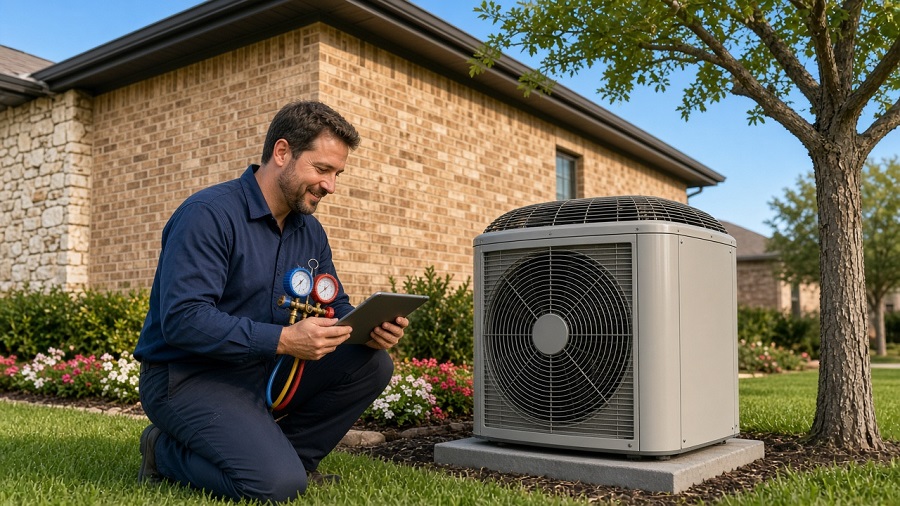
- AC out in summer: North Texas heat makes a dead AC a health and safety issue fast, especially with kids or older residents in the home.
- No heat or frozen pipes in winter: We don't get many hard freezes, but when one comes, a burst pipe can flood a home in hours.
- Water heater failures: Hot water is written right into the statute.
- Exterior locks and doors: Security problems never wait until next week.
- Active leaks and sewer backups: Water damage gets more expensive by the hour, for the owner as much as anyone.
A dripping bathroom faucet or a squeaky garage door still gets fixed, just on a normal schedule.
What the Law Doesn't Make You Pay For
Owners have protections too:
- Tenant-caused damage: During the lease, you generally don't have to repair damage caused by the tenant, an occupant, a family member or a guest, unless it's normal wear and tear (§ 92.052(b)).
- Rent must be current: The repair duty under § 92.052 applies when the tenant isn't delinquent in rent at the time notice is given.
- Written-notice requirement: If your written lease requires repair requests in writing, the tenant's notice has to be in writing (§ 92.052(d)). A good lease routes every request through one channel.
These protections only help if you can prove them. Without move-in photos and a dated work-order history, "the tenant caused it" turns into one person's word against another's.
Three Ways Owners Get Caught Off Guard
1. An outdated or homemade lease. Section 92.056(g) requires the lease to include bold or underlined language describing the tenant's repair remedies. Leases downloaded years ago, or written from scratch, sometimes leave it out. We use a current Texas lease for every home we manage.
2. Bad timing after a repair request. For six months after a tenant gives a good-faith repair notice, Texas generally bars a landlord from responding with a rent increase, a non-renewal, reduced services or an eviction filing (§ 92.331). Evictions are still allowed on grounds the law permits, such as nonpayment or a material lease breach (§ 92.332). An owner who raises rent right after a repair dispute can create a problem without meaning to. We plan renewals and rent changes with that window in mind.
3. No paper trail. Texts, voicemails and "I called a guy" don't hold up well. When a dispute happens, the owner with timestamps, invoices and photos is in a far stronger position.
How We Protect Owners on Every Repair
At Salsberry, every maintenance request follows the same steps:
- One channel: Residents submit requests through our online portal or our 24/7 maintenance line, so each one is logged with a date and time.
- Triage: Health and safety issues like heat, AC, water, sewage and locks are dispatched right away. Routine items are scheduled efficiently.
- Vetted vendors: Licensed, insured contractors bill fair rates, so owners don't pay emergency premiums for routine work.
- Owner visibility: Owners can see work orders and invoices in their owner portal.
- Charge-backs: When an inspection shows tenant-caused damage, it's documented and charged back under the lease.
- Inspections: Move-in and periodic inspections catch small problems before they become claims.
If you want the bigger picture on budgeting and preventive work, our DFW landlord's guide to rental property maintenance covers it.
Tenants get a responsive, professional experience. Our job is still to protect the owner's asset, income and legal position, and fast, documented repairs are one of the best ways to do it.
Want a Second Look at Your Rental?
Parker and I bring 22+ years of combined property management experience, and we've seen how a single mishandled repair call can sour a good tenancy. If you own a rental in Keller, Southlake, Fort Worth or anywhere in DFW, I'm happy to do a free, no-obligation review of your lease and repair process and tell you honestly whether it would hold up. Our management agreements are month-to-month, so there's no long contract to worry about. Call (304) 476-0735 or reach out at salsberrypropertymanagement.com.