
Talking about "the Fort Worth rental market" as a single thing is like talking about "the Dallas rental market" or "the DFW rental market" — technically accurate, functionally useless. Fort Worth is genuinely huge, geographically diverse, and made up of neighborhoods that behave more like independent submarkets than parts of one whole. A rental in the Cultural District has almost nothing in common with a rental in the Alliance corridor. A TCU-area home operates by different rules than a Fairmount bungalow.
If you own a rental in Fort Worth — or you're considering one — the single most useful thing you can do is understand which submarket your home actually sits in and what that submarket rewards. Renting out a home in Fort Worth well means matching your strategy to your specific neighborhood, not to a citywide average.
Here's how I'd break it down. This isn't every neighborhood in Fort Worth — that's a book, not a blog post. It's the ones that consistently work as rentals and the practical read for each.
The Cultural District and Museum Area
The Cultural District — home to the Kimbell, Modern Art Museum, Amon Carter, and the surrounding walkable residential streets — is one of the most stable premium rental submarkets in Fort Worth. Tenants here are typically professionals, doctors and staff at nearby medical facilities, and people who specifically want the museum-district lifestyle and are willing to pay for it. Homes lease at real premiums, tenants tend to be settled and long-staying, and the rental market in this pocket of Fort Worth is meaningfully different from the rest of the city — closer to Southlake in expectations than to the Fort Worth median.
What to know: presentation matters more here. Renters at this price point notice everything.
West 7th, River Crest, and Nearby
West 7th corridor and the neighborhoods that spread from it — Crestwood, Monticello, and the streets that lead toward River Crest — are one of the strongest walkable rental markets in DFW, period. Young professionals, dual-income couples, empty-nesters wanting to downsize into character homes without giving up amenities. The mix of restaurant density, entertainment, and residential quality here supports both smaller condo-style rentals and larger single-family homes.
What to know: the tenant pool skews younger and more mobile than the suburbs — expect meaningful turnover but strong demand refill. Furnished rentals actually work in some of these pockets.
Fairmount and the South Main Historic District
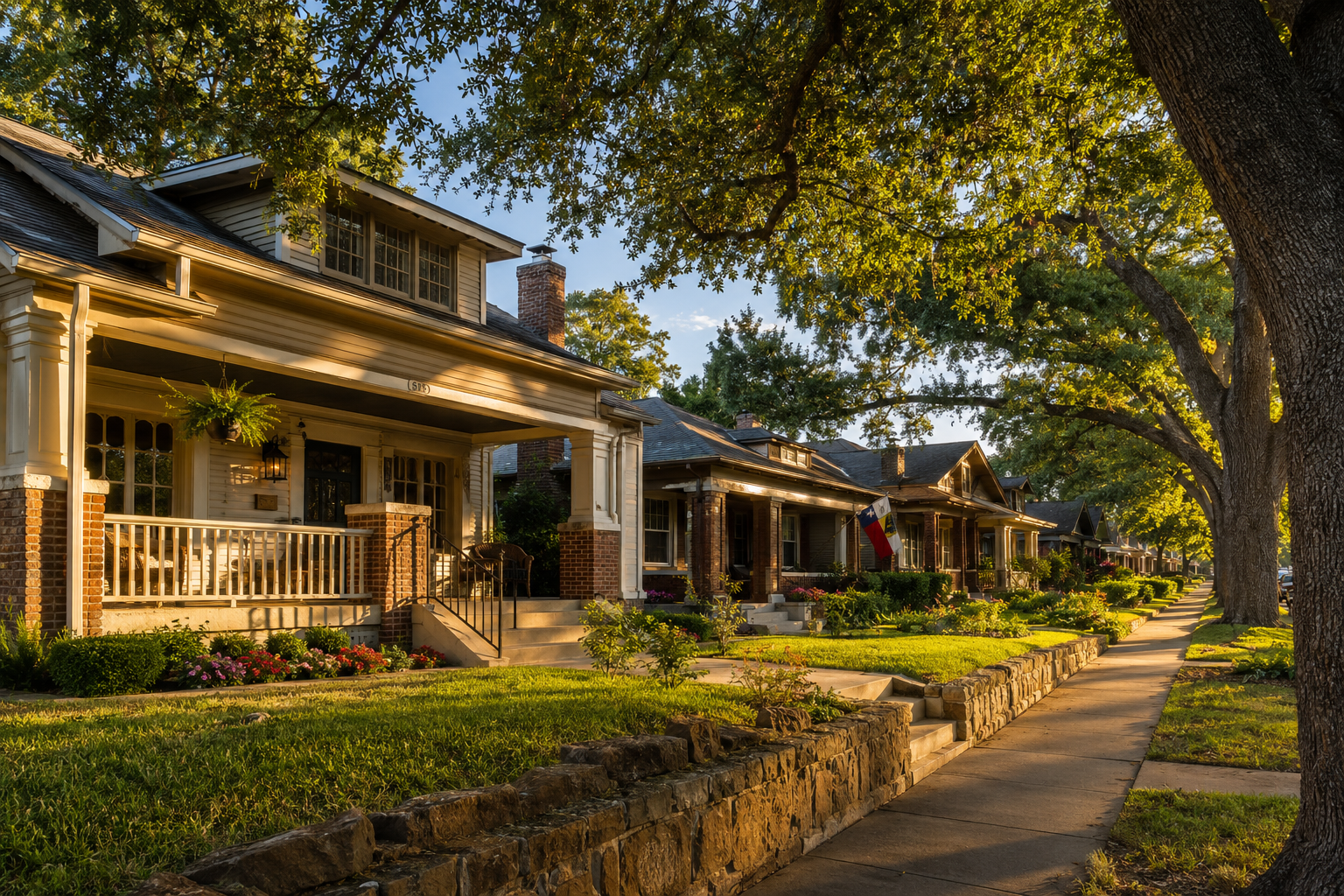
Fairmount is a National Historic District of restored bungalows and Craftsman homes, and the surrounding streets have quietly become one of Fort Worth's most desirable renter neighborhoods. Tenants here are seeking character — historic homes, walkable streets, coffee shops, the Magnolia corridor. It attracts a distinctive renter profile: creatives, young families who value place over square footage, professionals who want to live somewhere with genuine identity.
What to know: these are older homes and they require real maintenance investment. But well-restored Fairmount rentals command premium rents and attract long-term tenants who treat them like their own homes.
The TCU Area
The TCU-area rental market is its own animal. It's a specific submarket driven by students, faculty, TCU-adjacent staff, and the alumni and boosters who own second homes here. If you're renting out a home in the TCU area, you need to know which slice you're in: student-oriented rentals are their own operation with higher turnover, more wear-and-tear, and different lease cycles. Faculty and professional-oriented homes further out behave more like traditional family rentals.
What to know: don't confuse the two. A home marketed as "near TCU" for students is a different business than a family home in Bluebonnet Hills. Both work, but the strategies are opposite.
Near Southside and the Hospital District
The Near Southside — around Magnolia Avenue and the medical district — has been growing steadily for years and it shows in the rental market. Healthcare workers, hospital staff, medical residents, and young professionals who want to be close to the corridor make up a substantial share of the renter pool. The area's walkability, restaurants, and vibrant street life support consistent demand at a wide range of price points.
What to know: this is one of the fastest-changing parts of Fort Worth. Comps from three years ago aren't reliable. Recent leased comps matter more here than in slower-moving submarkets.
The Stockyards, Historic North Side, and Nearby
The area around the Fort Worth Stockyards and the historic North Side has its own rhythm. Tourism, hospitality workers, service industry professionals, and locals who love the character all form part of the tenant pool. Rents here are meaningfully more affordable than the Cultural District or TCU submarkets, but the neighborhood has a real personality that attracts renters who specifically want to live there.
What to know: older housing stock, so maintenance planning matters. But renter retention can be strong when tenants genuinely love the area.
Alliance Corridor and North Fort Worth
We covered this in depth in our recent Q2 2026 report, but for completeness: the North Fort Worth ZIPs (76244, 76248, 76179, 76052, 76131, 76137) are their own submarket — Alliance corridor jobs, newer housing stock, family-oriented, functional and steady. Median rents around $2,250, homes leasing at 100% of asking in 25 days. See our Q2 report for the full breakdown.
What to know: this is the workhorse rental submarket of Fort Worth for buy-and-hold investors. Deep, stable, professional.
Downtown and Sundance Square
Downtown Fort Worth has quietly grown a real rental market of its own — high-rise apartments, converted lofts, and the residential edges around Sundance Square. Tenants here are professionals working downtown, empty-nesters wanting an urban experience, and younger renters who prioritize walkability. It's a specific product for a specific renter and it works when done well.
What to know: this isn't a market for single-family investors typically — it's condo, loft, and multi-family territory. But it's a real slice of the Fort Worth rental market worth understanding.
East Fort Worth and Beyond
East Fort Worth includes a wide range of neighborhoods — some working-class established areas with genuinely affordable price points, some in transition, some with real long-term investment appeal. This is where careful comp analysis and neighborhood-by-neighborhood diligence matters most. Property management in Fort Worth's east side requires knowing which specific block you're on. Two homes six streets apart can be very different markets.
What to know: don't buy on price alone. The best returns come from knowing the specific pocket. The worst mistakes come from assuming a low entry price means a good investment.
The Common Thread
The single most important thing to understand about renting out a home in Fort Worth is that "Fort Worth" isn't the meaningful unit. Your specific neighborhood is. A tenant renting in Fairmount isn't looking at homes in Alliance. A Cultural District renter isn't touring the Stockyards. Match your rental strategy to your specific submarket — pricing, presentation, marketing, tenant profile — and the returns follow.
How We Can Help
If you own a rental in Fort Worth or are considering one, we're glad to give you a free, no-obligation rental analysis specific to your neighborhood — not a citywide average. We know these submarkets, and we can give you an honest read on realistic rent, appropriate tenant profile, and what would meaningfully improve your outcome in your specific pocket of the city.
Request one anytime at salsberrypropertymanagement.com.