
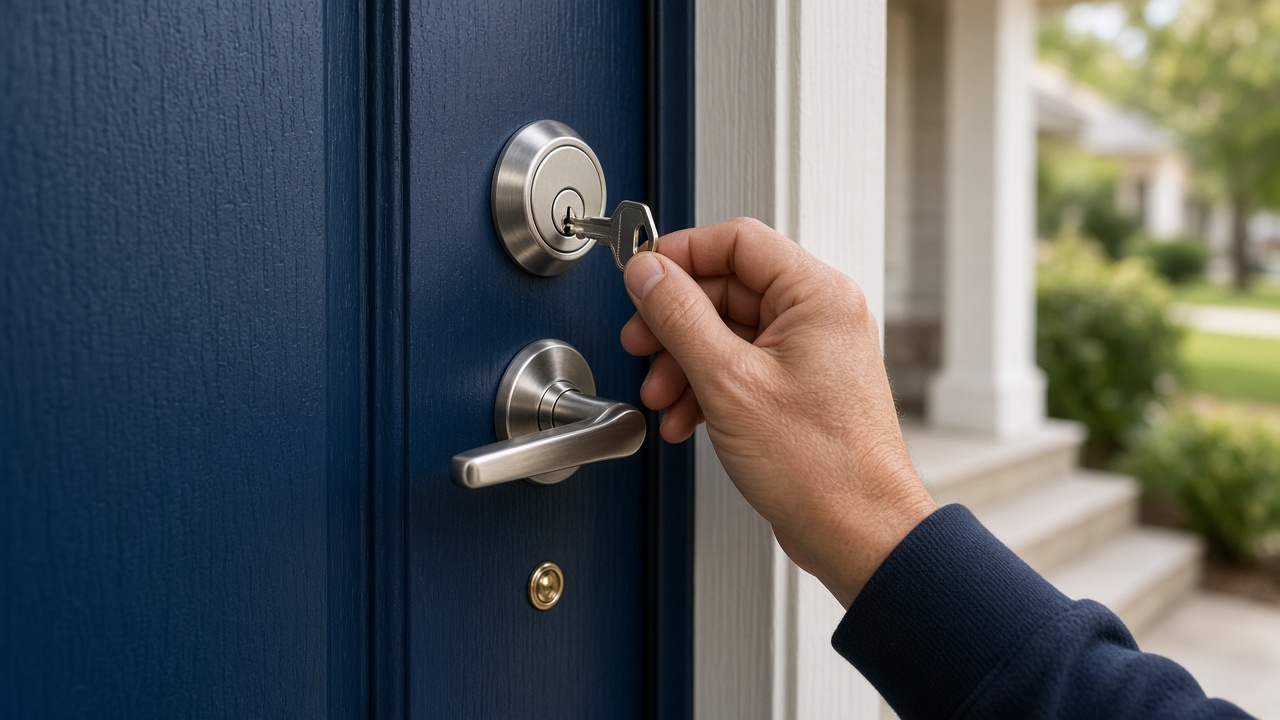
"I'm about to rent out my house. Do I really have to change the locks, and what else does Texas require on the doors and windows?"
I hear some version of that question every month from owners in Keller, Roanoke and Northlake, usually right before a first lease. The short version is yes, you have to rekey, and Texas is more specific about locks than most owners expect. The rules sit in Subchapter D of Chapter 92 of the Texas Property Code, and they apply to single-family houses, duplexes and townhomes just as much as apartments. Here's how we handle them at Salsberry on every home we lease.
The Short Answer
Before a tenant moves in, every Texas rental needs a specific set of security devices installed at the owner's expense, and the locks have to be rekeyed within seven days after each tenant turnover. During the lease, you also have to repair or replace a security device when the tenant reports a problem. None of this is hard or expensive when it's built into your make-ready checklist. It gets expensive when it's missed.
This post is general information, not legal advice. For a specific situation, talk with a Texas real estate attorney.
What Every Rental Must Have Without the Tenant Asking
Section 92.153 lists the devices a dwelling must have while a tenant is in possession, with no request needed:
- Window latches: a latch on each exterior window.
- A keyed lock on each exterior door: either a doorknob lock or a keyed dead bolt.
- A keyless bolting device on each exterior door: think of the thumb-turn-only dead bolt that can't be opened from outside. The statute is clear that chain latches, flip latches, surface-mounted slide bolts and spring-loaded nightlatches don't count.
- A door viewer on each exterior door: a peephole with at least a 160-degree view, or a clear glass pane or one-way mirror.
- Sliding glass doors: a sliding door pin lock, plus either a handle latch or a security bar.
- French doors: one door meets the normal rules, and the other needs top and bottom bolts that meet the throw lengths in Section 92.153(b).
One detail owners miss: under Section 92.151, an "exterior door" includes the door between the house and the garage. That garage entry door is where we most often find a missing keyless dead bolt or peephole on homes coming to us from self-management.
There are narrow exceptions for keyless bolting devices when a tenant or occupant is over 55 or has a disability and the specific written conditions in the statute are met. If that applies, get it documented properly rather than just leaving the device off.
Height, Strike Plate and Throw Rules
Section 92.154 gets specific about how dead bolts are installed:
- Height: no lower than 36 inches from the floor, and no higher than 48 inches for devices installed on or after September 1, 1993 (54 inches for older installs).
- Strike plate: screwed into the part of the doorjamb that faces the edge of the door, unless the jamb itself is metal.
- Throw: keyed and keyless dead bolts installed on or after September 1, 1993, need a bolt that throws at least one inch.
If you've ever added a decorative "extra" lock up high on a door, check it against these numbers. A device mounted at the wrong height doesn't satisfy the requirement.
Rekeying After Every Turnover
Section 92.156 requires the owner to rekey every key, card or combination security device, at the owner's expense, no later than the seventh day after each tenant turnover date. Interior and closet doors aren't included.
- Rekey every time, not just when keys go missing: you don't know how many copies the last tenant made, or who has them.
- Don't forget keypads and smart locks: a combination is a security device too, so reset codes at turnover.
- Document it: we keep the vendor invoice or a dated photo with the work order, so there's a clear record the rekey happened.
- Lease language matters: if a tenant breaks a written lease and leaves, you can deduct the reasonable rekeying cost from the security deposit only if the lease authorizes it in underlined or boldface type.
Repairs and Requests During the Lease
Once a tenant is in, Section 92.158 requires you to repair or replace a security device when the tenant reports it isn't working. Under Section 92.161, a reasonable time to handle a request is generally presumed to be no later than seven days, and 72 hours when the tenant reports an attempted or actual break-in. A few points that protect owners:
- Normal wear and tear is on the owner: a worn-out lock is your cost.
- Tenant damage can be charged back: under Section 92.162, you can charge for repairs caused by tenant misuse or damage if an underlined lease provision allows it, and you can't charge more than the actual third-party cost.
- Requests can be oral: unless your written lease requires them in writing in underlined or bold print (Section 92.159). Strong lease language plus a portal for maintenance requests keeps everything on the record.
Why It Matters to Owners
The statute gives tenants real remedies when an owner doesn't comply, including the right to end the lease and seek damages and civil penalties. I won't walk through those here. The point for owners is simple: these are some of the cheapest items in a make-ready, and skipping them can turn a good lease into a costly one.
How We Handle It at Salsberry
- Make-ready checklist: every exterior door, window and slider is checked against Subchapter D before move-in, including that garage entry door.
- Rekey on every turnover: scheduled with the make-ready so it's done well inside the seven-day window.
- Fast repair routing: residents submit requests through the portal or call our 24/7 line, and lock issues get handled quickly. Learn more about our maintenance services.
- Lease language that protects you: we check that the lease includes the underlined and bold provisions the statute calls for before anyone signs.
Want This Handled for You?
Parker and I bring 22+ years of combined property management experience. We've leased more than 500 homes, average about 12 days on market and have earned 70+ five-star reviews. We manage residential homes only, so this is all we do.
Our pricing is simple. Full-service management is an 8% monthly management fee plus a leasing fee of 50% of the first month's rent. If you only need a great tenant placed, Placement Only is 100% of one month's rent. There are no other fees. Our agreements are month-to-month and can be canceled anytime, and if we placed the tenant, we handle the eviction for free. See the details on our pricing page.
If you own a rental in Keller, Roanoke, Northlake, Haslet or Flower Mound, I'm happy to walk through your home's security devices or put together a free, no-obligation rental analysis. Call (304) 878-8629 anytime, or learn more about our Keller property management, Roanoke property management and Northlake property management services.