
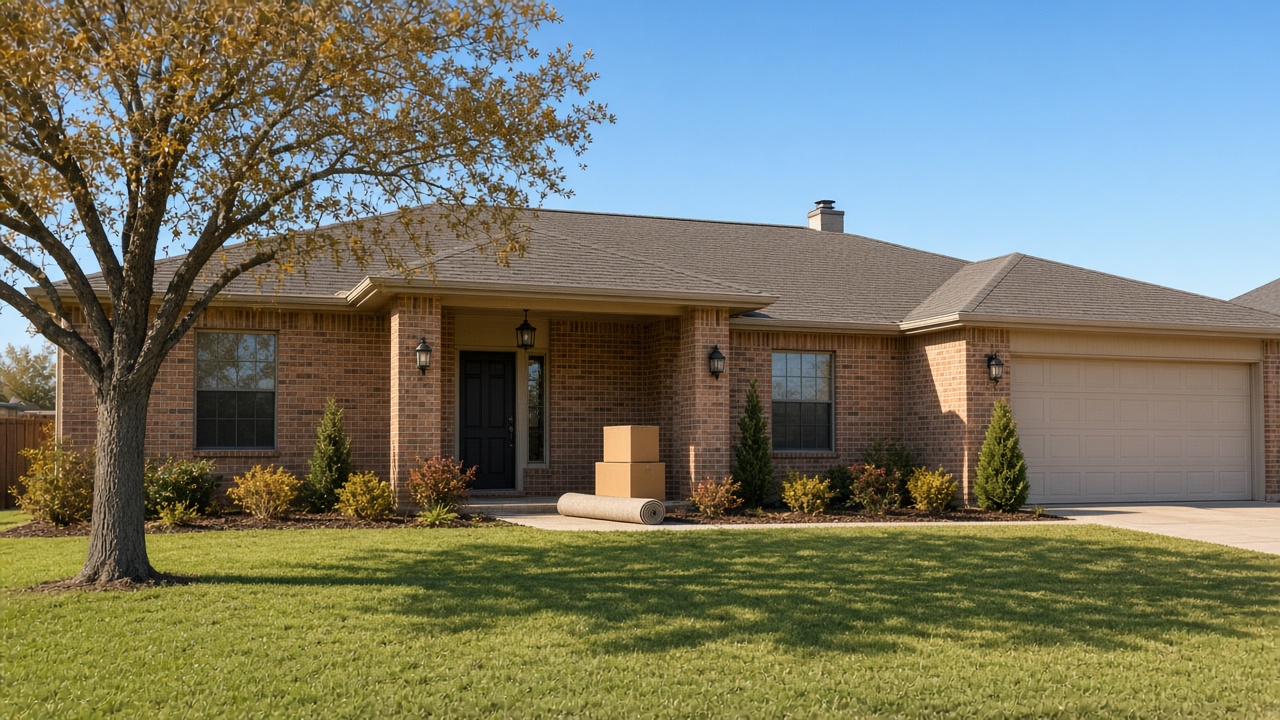
"If I move out and rent the house, what happens to my property taxes?"
I get this question almost every week from owners in Keller, Roanoke, Northlake, Haslet and Flower Mound who are relocating, upsizing or moving in with family and want to keep the house as a rental. It's a smart question to ask early, because the homestead exemption is one of the biggest line items in a Texas tax bill, and losing it changes the math on your rent. Here's my honest read on what changes, when it changes and what to do about it.
The Short Answer
Once a home is no longer your principal residence, it stops qualifying as your residence homestead. That means the school district homestead exemption, any local homestead exemptions and the 10% annual cap on your appraised value all go away, usually starting with the next tax year. You're required to tell your appraisal district in writing, and your tax bill will likely go up. None of that is a reason not to rent the house. It's a reason to price the rent with the real numbers.
This is general information, not legal or tax advice. Talk with your CPA and your appraisal district about your situation.
What the Homestead Exemption Is Worth Today
- School taxes: Texas voters approved Proposition 13 in November 2025, and school districts must now exempt $140,000 of a homestead's value (Texas Comptroller). The Comptroller's own example: on a home appraised at $300,000, you'd pay school taxes as if it were worth only $160,000.
- Over 65 or disabled: Under Texas Tax Code Section 11.13(c), qualifying owners get an additional $60,000 school exemption on their homestead. That benefit is tied to the homestead too.
- Local options: Cities, counties and other taxing units can adopt their own homestead exemption of up to 20% of appraised value, so the total you lose depends on where the home sits.
The Part Most Owners Miss: The 10% Cap
The exemption gets the attention, but the appraisal cap can matter more if you've owned the home a while. Under Texas Tax Code Section 23.23, the appraised value of a homestead can't rise more than 10% a year (plus new improvements). In a market that's run up the way ours has, a long-time owner's appraised value can sit well below market value.
That cap expires on January 1 of the first tax year that neither you nor your spouse qualifies for the homestead exemption. When it does, the appraisal district can move your appraised value up to full market value in one step.
A quick illustration with round numbers (an example, not a real property): if your capped appraised value is $380,000 and the district's market value is $450,000, you'd be taxed on $380,000 minus your exemptions while it's your homestead, and on the full $450,000 with no homestead exemptions once it's a rental.
Texas also has a temporary 20% limit on yearly appraisal increases for most non-homestead real property, which covers property valued at $5.32 million or less for 2026 (Texas Tax Code Section 23.231; Bexar Central Appraisal District). As written, it expires December 31, 2026, unless the Legislature extends it. Ask your appraisal district how it would apply to your home in the year it converts.
When the Change Actually Hits
- January 1 is the test date: Under Texas Tax Code Section 11.42, exemption eligibility for a tax year is based on your qualifications on January 1. If the house was your homestead on January 1 and you move out in the spring, you generally keep the exemption for the rest of that year.
- Tell the district before May 1: Texas Tax Code Section 11.43(g) says you must notify the appraisal office in writing before May 1 after your entitlement to the exemption ends.
- Don't let it ride: If an exemption was allowed in error, Section 11.43(i) lets the chief appraiser add the exempted value back to the tax roll for any of the five preceding years. That's a bill nobody wants to get years later.
- A temporary move is different: Under Section 11.13(l), a home can keep its homestead status during an absence of less than two years if you don't establish a different principal residence and you intend to move back. If you're buying or settling into a new primary home, that doesn't apply. Ask your appraisal district before you assume it does.
Who to Call for Your Town
- Keller and Haslet: Tarrant Appraisal District
- Most of Roanoke, Northlake and Flower Mound: Denton Central Appraisal District
- Decatur and the rest of Wise County: Wise County Appraisal District
If your new house is in Texas, file for the homestead exemption there. You can't claim homesteads on two homes at once.
Don't Forget the Federal Side
- Property taxes become a rental expense: Once the home is a rental, its property taxes go on your rental return along with insurance, repairs and management fees. The IRS covers the basics in Publication 527.
- Watch the sale clock: To exclude gain when you sell a main home, you generally need to have owned it and lived in it for at least two of the five years before the sale (IRS Publication 523). Rent it for more than three years and that exclusion can slip away. Depreciation you take while it's a rental also can't be excluded.
Neither of these is a dealbreaker. They're just worth a conversation with your CPA before your first tenant moves in.
The Property Management Angle
Here's what I tell owners: run the rent numbers on the tax bill you'll actually pay, not the one you're paying now. When we put together a rental analysis, we look at what comparable homes are leasing for nearby, then walk through your expected taxes, insurance, HOA dues and maintenance so you know your real monthly picture before you decide. Some owners find the home cash-flows nicely. Others decide selling makes more sense. Either way, you're deciding with real numbers.
Thinking About Renting Out Your Home?
Parker and I bring 22+ years of combined property management experience. We've leased more than 500 homes, average about 12 days on market and have earned 70+ five-star reviews. We handle residential homes only, so single-family rentals are all we do.
Our pricing is simple. Full-service management is an 8% monthly management fee plus a leasing fee of 50% of the first month's rent. If you only need a great tenant placed, Placement Only is 100% of one month's rent. There are no other fees. Our agreements are month-to-month and can be canceled anytime, and if we placed the tenant, we handle the eviction for free. See the details on our pricing page.
If you own a home in Keller, Roanoke, Northlake, Haslet or Flower Mound and you're thinking about renting it out, I'm happy to put together a free, no-obligation rental analysis. Call (304) 878-8629 anytime, or learn more about our Keller property management, Roanoke property management and Northlake property management services.