
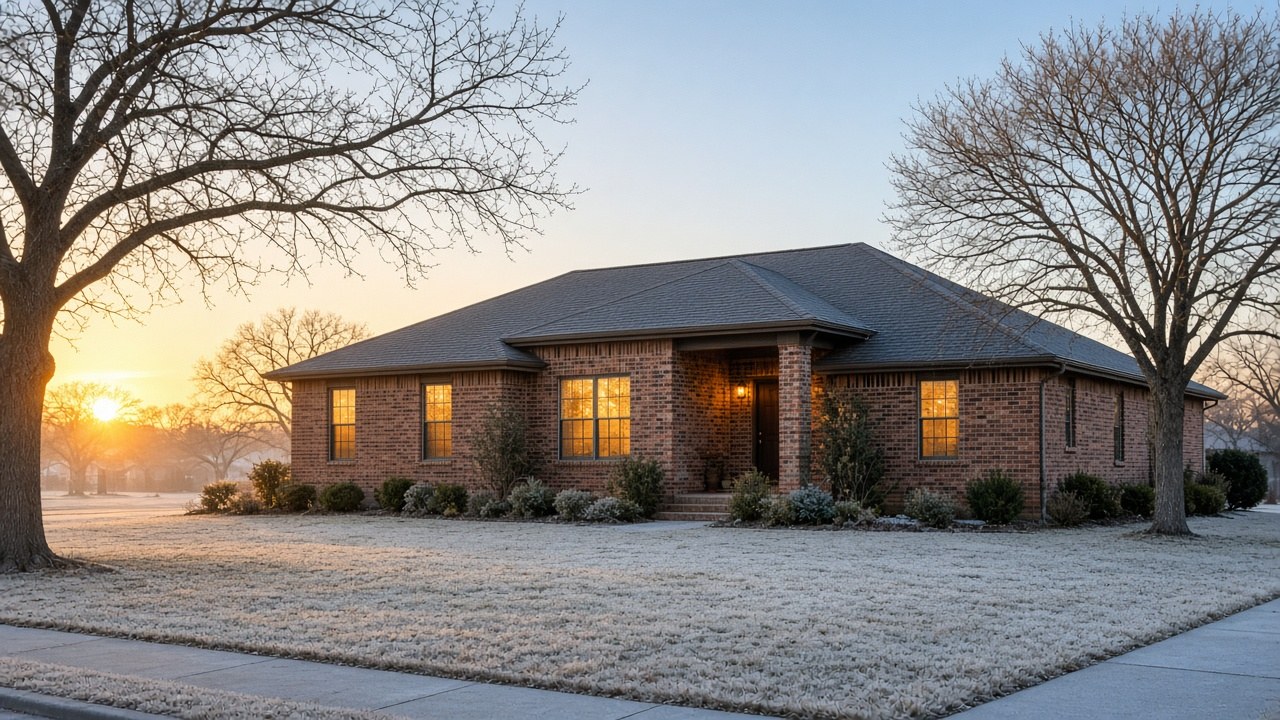
"What do I actually need to do when a freeze is coming?"
Residents ask me that every winter, usually the day the forecast drops into the 20s. The short answer: keep the heat on, protect the pipes on exterior walls, know where your water shut-off is, use space heaters carefully, and tell us about anything heating-related right away instead of waiting. North Texas winters are mild most days, but a hard freeze can show up with very little notice, and a few minutes of prep makes a big difference for your comfort and your home. Here's the checklist I give our residents in Keller, Roanoke and Northlake.
The Short Answer
Most cold-weather problems we see are preventable. A thermostat turned way down overnight, a garden hose left on the faucet, a cabinet door closed on a cold exterior wall, or a heater that "kind of works" are the usual culprits. Handle the simple things below, and report anything unusual early so we can get it fixed before the cold snap, not during it.
Before the First Freeze
- Test the heat now: Switch your thermostat to heat and make sure warm air comes out of the vents within a few minutes. If it blows cold, cycles on and off, or smells unusual beyond the normal "first run" dust smell, submit a maintenance request. It's much easier to schedule a technician on a mild day than during a statewide cold snap.
- Change the air filter: A clogged filter makes the system work harder and can cause it to shut down. If your lease makes filter changes your responsibility, now is a great time to swap it.
- Disconnect garden hoses: A hose left attached can trap water in the outdoor faucet and the pipe behind it. Unhook it, drain it and store it. If the home has faucet covers, put them on.
- Find your water shut-off: Know where the main water shut-off valve is before you ever need it. If a pipe bursts, shutting the water off quickly is the single best way to limit the damage. If you can't find it, ask us and we'll help.
- Check your smoke and carbon monoxide alarms: Press the test button on each one. If an alarm doesn't sound or keeps chirping, let us know.
When a Hard Freeze Is in the Forecast
The American Red Cross has simple, practical guidance for preventing frozen pipes (American Red Cross, Frozen Pipes). Here's how it applies in a typical DFW home:
- Keep the thermostat steady: The Red Cross recommends keeping the thermostat at the same temperature day and night during very cold weather. A slightly higher bill is far better than a burst pipe.
- Open cabinet doors: Open the cabinets under kitchen and bathroom sinks, especially on exterior walls, so warm air can reach the plumbing. Move cleaners and chemicals out of reach of kids and pets while the doors are open.
- Let a faucet drip: When it's very cold, let cold water drip from a faucet served by exposed pipes. Even a trickle helps keep water moving.
- Keep the garage door closed: Many homes in our area have water lines or the water heater in the garage. Keeping the door shut holds in warmth.
- Heading out of town? The Red Cross recommends leaving the heat on and set no lower than 55 degrees if you'll be away during cold weather. Let us know your travel dates too, so we know the home is empty if a storm rolls through.
If a Pipe Freezes or Bursts
- Low or no water at one faucet: If you turn on a faucet and only a trickle comes out, the Red Cross says to suspect a frozen pipe. Keep the faucet open and submit a maintenance request right away.
- Never use an open flame: Don't try to thaw pipes with a torch, a grill lighter or anything with a flame. That's a fire risk, and it's a job for a plumber.
- Water coming through a wall or ceiling: Shut off the main water valve, move belongings out of the way if it's safe, and call our 24/7 maintenance line right away at 304-878-8629. Take a few photos when you can, which helps us get the right vendor out fast.
Using Space Heaters Safely
Space heaters can help take the chill off a room, but they need respect. According to the National Fire Protection Association, heating equipment is one of the leading causes of home fire deaths, and space heaters and heating stoves accounted for 30% of home heating equipment fires but 73% of the deaths from those fires, based on 2020-2024 averages. NFPA also reports that 46% of heating equipment fires happened from December through February (NFPA, Home Heating Safety).
- Give it space: Keep space heaters away from curtains, bedding, furniture, clothing and anything else that can burn, and follow the manufacturer's instructions.
- Turn it off when you leave or go to sleep: Never leave a space heater running in an empty room.
- Plug it straight into the wall: Avoid extension cords and power strips unless the manufacturer says they're okay.
- Never heat the home with the oven or stove: They aren't designed for it, and it can be dangerous.
Carbon Monoxide and Generators
The U.S. Consumer Product Safety Commission calls carbon monoxide the "Invisible Killer" because it's colorless and odorless, and it reports that more than 200 people in the U.S. die every year from accidental non-fire carbon monoxide poisoning associated with consumer products, with more than 100 of those deaths linked to portable generators (CPSC Carbon Monoxide Information Center).
- Generators stay outside: Never run a generator, grill or camp stove inside the home or in the garage, even with the door open.
- If a CO alarm sounds: Get everyone outside to fresh air and call 911. Then let us know.
- Smell gas? Leave the home and call 911 or your gas company from outside. Don't flip switches or use anything that could spark.
When to Call Us
Here's a simple way to think about it:
- Call the 24/7 line now: No heat during freezing weather, water actively leaking or a burst pipe, or no water to the home. Call 304-878-8629 anytime, day or night, holidays included. For fire, smoke or a gas smell, call 911 first.
- Submit a maintenance request: A heater that runs but struggles to keep up, a chirping alarm, a dripping outdoor faucet, or a missing faucet cover. Our guide on how to submit a maintenance request that gets fixed fast walks through what to include.
- Check your renter's insurance: Make sure your policy is active and covers your belongings. The owner's insurance covers the building, not your stuff.
A Note for Owners
If you own a rental in Keller, Roanoke or Northlake, this is the kind of checklist we send our residents before winter, and our maintenance coordination and 24/7 line are there so a small issue gets handled before it becomes a big claim. A few quick facts about us:
- Simple pricing: Full-service management is an 8% monthly management fee plus a leasing fee of 50% of the first month's rent. Placement Only is 100% of one month's rent. There are no other fees. See our pricing page.
- No long-term contract: Our agreements are month-to-month, and you can cancel anytime.
- Eviction protection: If we place the tenant and an eviction is ever needed, we handle it for free.
- Proven results: 22+ years of combined experience, more than 500 homes leased, 12 average days on market, and 70+ five-star reviews. We manage residential homes only.
Learn more about our Keller, Roanoke and Northlake property management services.
Stay Warm Out There
To our residents: thank you for taking care of your homes, and stay warm this winter. To owners thinking about renting out a home: I'll put together a free, no-obligation rental analysis anytime. Call us at 304-878-8629 or reach out through our website, and we'll walk through it together.